
How Traffic Warrants Work in Marshall County
A ticket, a missed court date, a warrant, the case outcome, and a BMV suspension are five different events. Indiana Code 9-30-3-8 gives a court authority to issue an arrest warrant when a driver fails to appear or answer a traffic information or summons. The same statute covers notice to the BMV when a warrant sits unexecuted. Where does the case live now? Traffic matters in Marshall County go through the county Circuit and Superior Courts, since no standalone city or town court remains. The Plymouth City Court and Argos Town Court are abolished. One more point: whichever police agency wrote the ticket has no power over recalling the warrant. That belongs to the court.
Marshall Traffic Cases Use Two Systems
Two offices, two jobs. The court controls the ticket case, appearances, the warrant, payment eligibility, and the final outcome. The Indiana BMV controls driving privileges and reinstatement. A compliance receipt from the Marshall County court is not instant proof your license changed, because the BMV keeps its own record. Start with the Clerk. Ask if the case is pending, if a public failure-to-appear or warrant entry exists, and what action the court wants from you. Only then check BMV status and reinstatement duties. That order avoids the common mistake of reading a suspension as proof of an arrest warrant.
Marshall County Traffic Warrant Checks
Marshall County publishes no public traffic-warrant lookup. MyCase can surface an eligible public case, but a case search is not a warrant search. If you have a citation or cause number, it makes any check easier.
- Locate the citation or cause number and search the public case through MyCase.
- Call the Marshall Clerk at 574-936-8922 to confirm the court and current public entry.
- Ask the issuing court what payment, appearance, motion, or hearing is required.
- For warrant or custody procedure, call the Sheriff at 574-936-3187 and use Press 2.
- Check the BMV reinstatement route separately.
Marshall Clerk Traffic Contact
The Marshall County Clerk sits at 211 W. Madison Street, Plymouth, Indiana 46563, and the staff directory lists traffic-ticket service. When you call, have the name on the citation, the citation or cause number, the document date, and the court if you know it. Staff can identify the public court record and walk you through the administrative steps that exist. They cannot give legal advice, and paying is not guaranteed to resolve every warrant. Ask for the later order or CCS entry that documents what the court actually did.
Traffic Warrants: What They Show
A public case record may list fields such as the citation or cause number, dates, and case status. Marshall County publishes no fixed warrant-number format, so do not treat a citation number as a warrant number.
| Citation or cause number | The key identifier, such as a case beginning with 50D03. |
|---|---|
| Allegation | The traffic infraction, ordinance matter, or related charge. |
| Issuing court | The Marshall Circuit or Superior Court division holding the case. |
| Amount or bond | Any public amount, due entry, or bond order, subject to confirmation. |
| Status event | FTA, warrant, payment, appearance, recall, dismissal, or disposition entry. |
Official Payment Is Not a Lookup
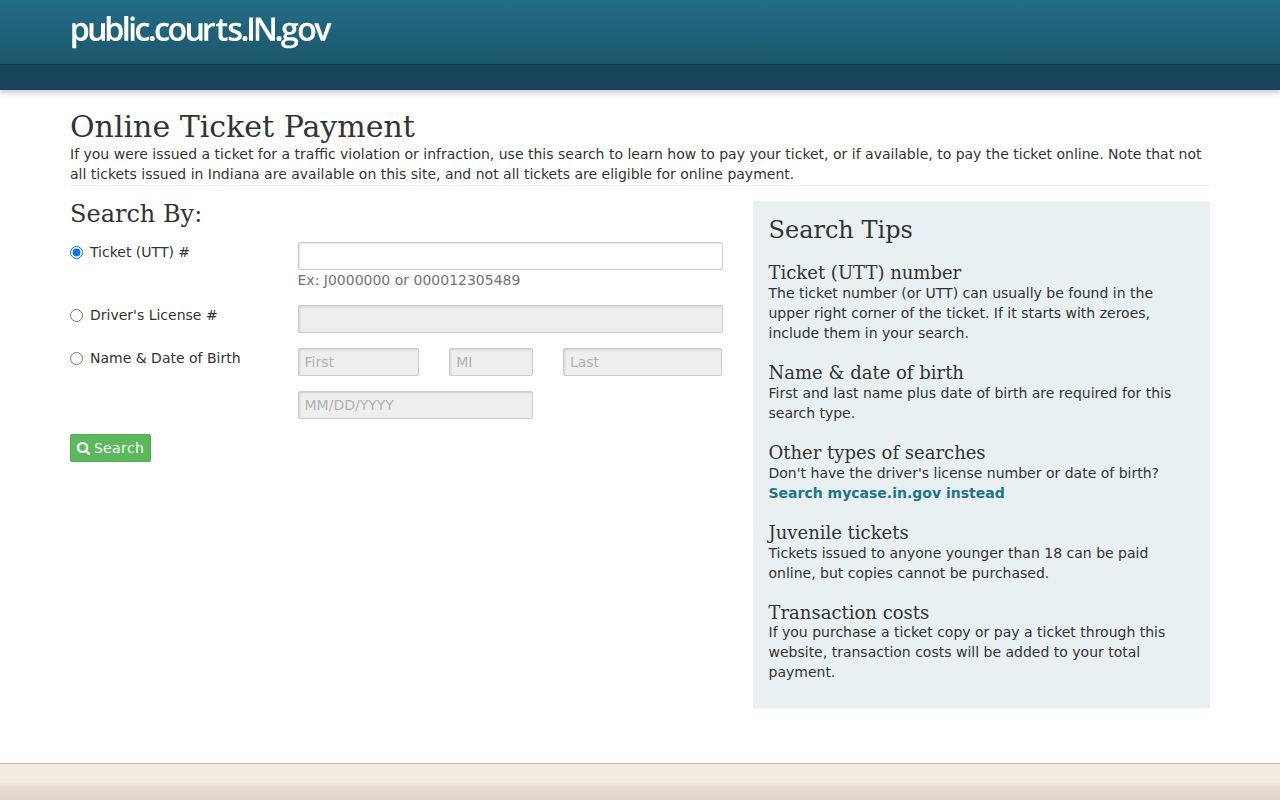
The Indiana traffic payment portal takes payments; it is not a warrant database. Eligibility varies, and not every Marshall County case can be paid there. Confirm the court and citation with the Clerk before you use it. Pay only after the court confirms the amount and method. Save your confirmation. Then ask for the court record showing the resulting recall or disposition, since the transaction alone is not that record.
Clearing a Marshall County Traffic Warrant
What clears a Marshall County traffic warrant depends on the case. The court may want payment, a new appearance, a motion, bond, or a hearing. The case can stay pending until payment, dismissal, or another disposition, so ask instead of assuming online payment lifts the warrant.
- Confirm the warrant, court, amount, and next date.
- Complete the payment or appearance the court orders.
- Keep the receipt and obtain the updated CCS or recall order.
- Confirm the court sent any needed compliance notice to BMV.
- Verify driving privileges separately before driving.
Warning: A payment receipt alone does not prove warrant recall or immediate restoration of Indiana driving privileges.
Marshall FTA-to-BMV Sequence
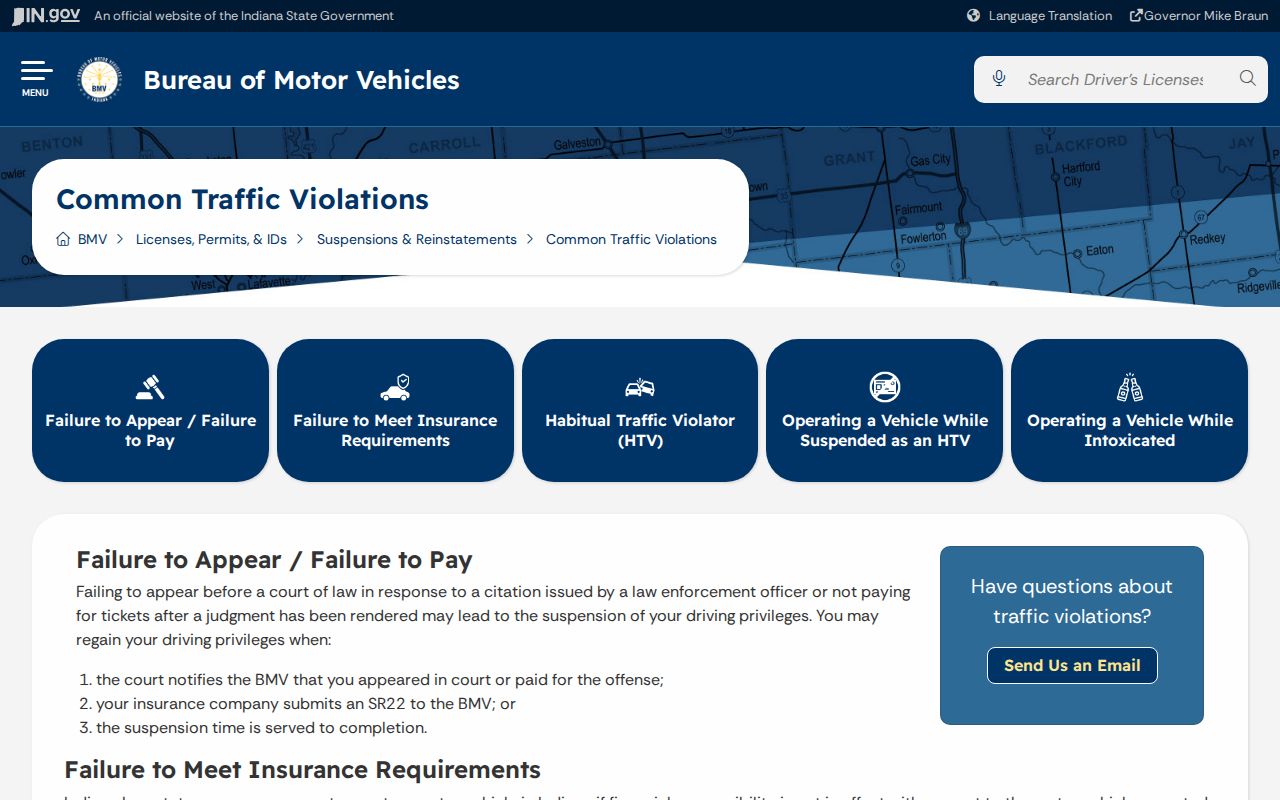
Indiana guidance ties failure to appear or failure to pay to suspension. The court transmits that information to the BMV, which is why you contact the court first in Marshall County. Once you comply, the court supplies the documentation or notice the BMV process needs. The BMV page spells out the FTA and FTP consequence. It says nothing about warrant status. Use the court docket for that question, not the BMV record.
Keep the court receipt and any later reinstatement notice. If your status does not change, call the court and the BMV separately, since each keeps a different record. Note: Court first, BMV second, license status last is the safest order.
How Traffic Warrants Trigger License Holds
One missed traffic obligation can generate several linked records. In Marshall County the usual local term after a failure to appear is "bench warrant" or simply warrant, not capias pro fine.
| Mechanism | What Triggers It | What It Does |
|---|---|---|
| Traffic warrant | Court action after failure to answer or appear | Authorizes arrest |
| FTA or FTP | Missed court date or unmet payment duty | Creates a court event and may prompt BMV notice |
| License suspension | BMV receives qualifying court information | Affects driving privileges, not warrant status |
Old Marshall Traffic Records
Not every old Marshall County traffic case lives online. Sealed, confidential, and non-digitized files may sit in storage instead. That is normal for archived work. The Clerk's copy form lets you ask for one cause number at a time, covering court orders, charging information, and CCS records. Fees are published as $1 per page and $3 for certification, though it pays to confirm the current amounts before you send money. Indiana APRA requires reasonable particularity in a request, and it does not force an office to build a new list for you. So ask for an existing case record within a date range. Never request or publish another person's driver record, and treat a commercial name-only hit as no proof of a Marshall County traffic warrant. A request that actually works names the person, the cause or citation number, the rough document date, and the exact records you want. The public CCS, an FTA order, a warrant-related entry, a payment order, or a recall order all count as fair targets. This gives the Clerk something real to pull rather than a hunt through every warrant file. Certification matters when another agency insists on an official copy, so ask that agency first which document it accepts.
Archived Marshall County records need care with court identifiers too. A code tied to a former city or town court can surface in an older file even though today's matters route through the county courts. Do not assume the old court still runs a public counter or can amend its own order. The Clerk can identify the successor record path. If the question is BMV compliance, ask which court entry proves the case event and whether notice went out. Then check the BMV record on its own timetable. Keep a simple resolution file as well. The citation, court instructions, payment confirmation, appearance notice, recall or disposition entry, and BMV correspondence each prove a different step. No single document settles everything, so hold on to them all.