
Plymouth Warrant Checks
Plymouth runs no city warrant portal and has no current municipal court. A Plymouth warrant check starts with Indiana MyCase, the state's public case tool. It may show an eligible public case summary. Search the person's full legal name first. Then narrow the results with birth details or a known cause number. Treat the case page as a lead only. It can omit protected material, and a docket entry may not say whether a warrant remains active. Real confirmation comes from the office that holds the record. Plymouth is the county seat, so the Marshall County Clerk, four county courts, and Sheriff sit close by, though each does a different job. Ask for the cause number, issuing court, warrant date, public status entry, and any next hearing. Never trust a name match alone.
- Search MyCase for a likely Marshall County case and save the cause number.
- Call the Clerk at 574-936-8922 for a cause-number-specific public record.
- Confirm the issuing court and the latest chronological case summary entry.
- Call the Sheriff at 574-936-3187 and choose Press 2 for jail and warrant information.
- Ask the court or an attorney what appearance, filing, bond, or hearing is required.
Plymouth's Three-Address Warrant Route
Plymouth court business runs across three addresses, so a generic trip to "the courthouse" can end at the wrong door. The Clerk and Superior Court Nos. 1 and 2 sit at 211 W. Madison Street. Marshall Circuit Court and Superior Court No. 3 use 501 N. Center Street. The Sheriff's office sits at 1400 Pioneer Drive. Each stop does one job: the Clerk supplies court records, the assigned court controls its own orders, and the Sheriff handles jail and warrant-information routing. So call first. No office here publishes a warrant-counter schedule, a surrender window, parking instructions, or courthouse security details. A Plymouth caller should give the cause number and ask which office and address fit the task. That one question keeps a Plymouth city-government visit from standing in for a court visit, and it keeps sensitive facts off an unverified email or web form. Note: Plymouth City Hall is not the custodian of Marshall County court warrant records.
Policing and Courts in Plymouth
Plymouth Police sits at 215 W. Washington Street. The number is 574-936-2126. Officers can answer questions about their own report, citation, arrest, or service activity. They do not keep the county's official case summary. Indiana's official court structure lists no current Plymouth municipal court, and the former Plymouth City Court is a historical office rather than a live warrant destination.
Plymouth Police Department
215 W. Washington Street, Plymouth, IN 46563
574-936-2126
Use for department-specific non-emergency questions.
Marshall County Clerk
211 W. Madison Street, Plymouth, IN 46563
574-936-8922
Use for public Circuit and Superior Court case records.
Only the court can issue or recall a warrant. Police and the Sheriff serve them within their lawful roles. That split matters most in Plymouth when someone needs proof a warrant was recalled or served.
Plymouth Warrant Images and Sources
The official Plymouth City Hall page lists the city-government contact point for questions that belong with city offices rather than the courts.
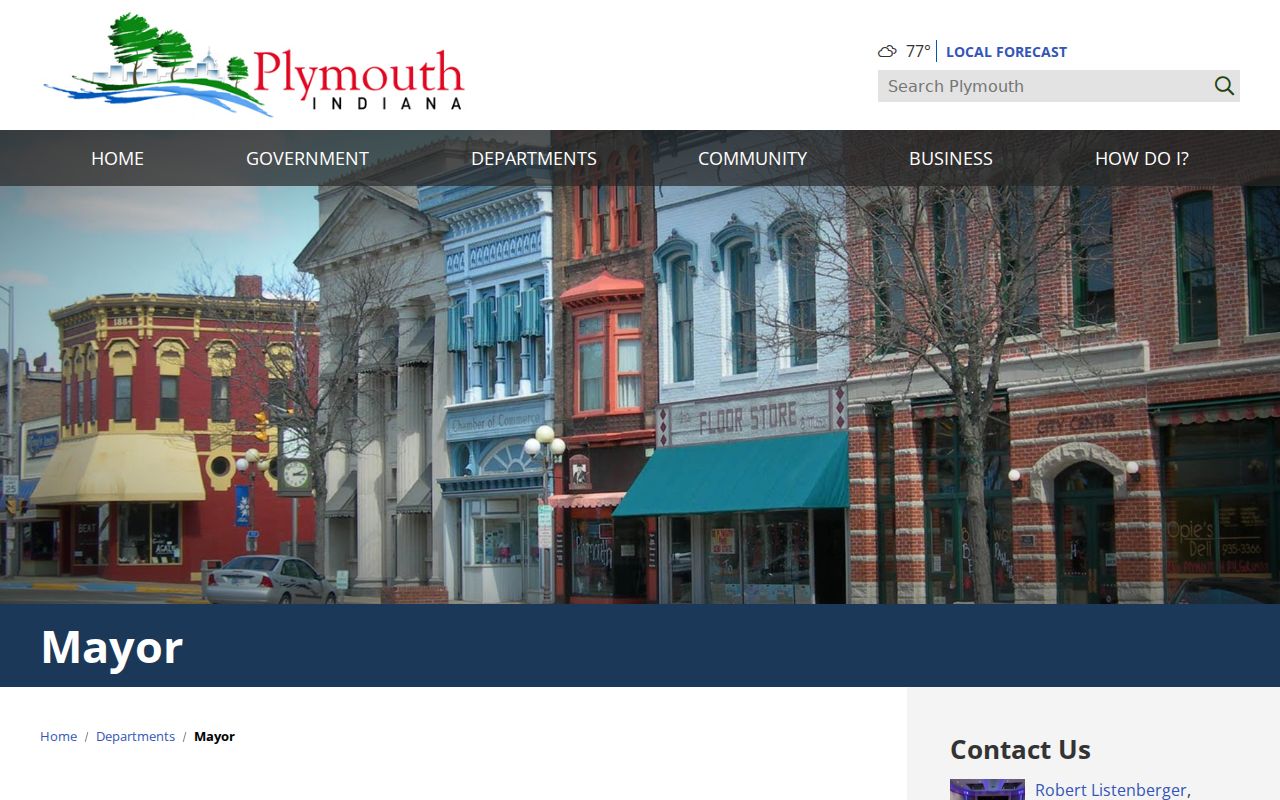
That page identifies a Plymouth city office. It does not make City Hall a custodian of warrant records, so verification still belongs with the Clerk and the current Marshall County courts.
Warrants in Plymouth: The Main Types
A Plymouth case can carry several distinct orders. An arrest warrant follows a judicial finding of probable cause. A bench warrant usually follows a missed hearing or an ignored court order. Traffic failure-to-appear issues can also affect BMV status. Search warrants authorize a search, under separate access limits. A hold from probation, parole, another state, or federal authorities is not automatically the same as a local Plymouth court warrant.
| Warrant Type | How It Arises | Who Issues It |
|---|---|---|
| Traffic or FTA | Missed response, payment, or court date | Assigned county court |
| Bench warrant | Missed hearing or breached court order | Circuit or Superior Court judge |
| Arrest warrant | Probable cause supports an arrest | Judge with jurisdiction |
| Search warrant | Probable cause supports a place or item search | Judge, with restricted access possible |
Each one is still a court command at a stage of a case. The cause number and current docket sort them out.
Plymouth's Former City Court
Old Plymouth papers may carry the code 50H01, the former Marshall/Plymouth City Court identifier. Indiana's official court materials list that court as abolished. The code still helps when reading an old ticket, paper notice, or archived docket. It is not a live courthouse. Nothing there issues warrants now. Today's Marshall County codes are 50C01 for Circuit Court and 50D01, 50D02, and 50D03 for the Superior Courts. Give the Clerk the exact code and cause number. That precision speeds a records request. It also helps the Clerk separate a legacy Plymouth city-court matter from a live county case.
Plymouth Warrant Records: What They Show
A public Plymouth record links a name to a court, cause number, charge description, filing date, and chronological entries. The warrant itself may hold more. Access can be limited while an order is unserved or a record is sealed. Read the newest Plymouth entry against the earlier order. Words like issued, served, recalled, or quashed mark different stages. Silence is not a stage.
| Cause number | Local court code, case type, year, and sequence, such as 50D02-26-CM-000123. |
|---|---|
| Person | Name and available identifying facts; confirm more than spelling. |
| Charge | Allegation or underlying case description, not proof of guilt. |
| Issuing court | The current Circuit or Superior Court controlling the order. |
| Bond | Any public amount or condition, subject to direct confirmation. |
| Status entry | Issue, service, recall, quash, or later court action when public. |
A Plymouth warrant listed as recalled or quashed has been withdrawn by the court. Only the issuing court itself can confirm that, so check its current entry before relying on anything else.
Plymouth Warrant Resolution Records
A warrant listing is only a starting point. Verification comes next. Ask the Plymouth court assigned to the case what it takes to resolve the order: counsel, a hearing, a written motion, a personal appearance, or bond. The Clerk can hand you the record but cannot promise what a filing will do. Police cannot give legal advice either. Keep the cause number plus copies of every order, receipt, appearance notice, bond paper, and docket entry you collect. A payment screen alone may not prove a Plymouth warrant was recalled. Traffic cases are also split: the court file and your BMV license status are separate, so confirm both after the court acts. If an arrest is possible, talk with an Indiana attorney before you travel to any office.
Safety first: Never evade police or test a warrant by appearing without first confirming the court, access rules, and legal options.
Plymouth Warrants and Marshall County
Plymouth police can open a case or write a citation. The warrant records themselves sit with the courts. Marshall Circuit and Superior Court hold the current orders, the Clerk keeps the public case files, and the Sheriff routes jail and warrant questions. Indiana offers no single statewide database that confirms every active warrant.
Warrant flow: Plymouth Police › Marshall Circuit or Superior Court › Marshall County Sheriff › restricted law-enforcement systems
For the wider office map, see the Marshall County warrant records overview. Pair what you learn there with the current county cause number, since a Plymouth fact is no substitute for it.
Plymouth Warrant Visit Planning
Plymouth puts the key offices close together, but close does not mean interchangeable. Call before you go. Ask whether the record is online, whether you need identification, what copy format applies, and which floor or building holds your case. Confirm public hours directly with each office. The county publishes no courthouse parking plan, security instructions, or special warrant-counter hours. Plymouth City Hall sits at 124 N. Michigan Street. Its meeting accommodation details cover city meetings only, not the county courts, so arrange court access support with the court or Clerk itself. The same care applies to picking up records. Give the cause number and name the document you want rather than asking for a broad, newly compiled warrant list.
Accessing Plymouth Warrant Records
Indiana court records follow the Rules on Access to Court Records, and agency records may also fall under the Indiana Access to Public Records Act. Access is broad but not absolute. In Plymouth, juvenile material, sealed cases, confidential personal data, and some unserved search-warrant material can be withheld. Your request must identify an existing record; no office has to build a new citywide list for you.
Key Rules:
Indiana Access to Public Records Act gives the public a route to inspect or copy disclosable agency records.
Indiana Access to Court Records Rule 4 states the general public-access rule for court records.
Indiana Access to Court Records Rule 5 identifies records excluded from public access, including protected categories.
Ask the Plymouth Clerk for a chronological case summary or order tied to the cause number. If access is denied, ask the reason and what review path is open.
Plymouth County-Seat Record Handoff
Plymouth residents can walk among city, court, Clerk, and Sheriff offices without leaving the county seat. Still, a record does not move just because the buildings are near. The request has to follow the document. Police hold their own agency reports. The Clerk keeps the court case files. The judge controls the warrant order, and the Sheriff answers custody and service questions. Give each Plymouth office the same cause number, and ask what date its information reflects. That habit keeps a police event from being mistaken for a current court status. A focused request also protects accuracy. Ask for the latest public chronological case summary and the specific order or return touching the warrant. If the record is unavailable, find out whether it is excluded, sealed, held elsewhere, or simply not found under your details. A missing search result never settles whether a warrant is active or cleared.