
How Arrest Warrants Work in Marshall County
Think of an arrest warrant as a judge's order telling officers to bring a named person into custody. Indiana procedure requires the judge to weigh probable cause first. That means a reasonable basis to believe a crime occurred and that this person committed it. From there the charge moves through the regular criminal case. A sworn complaint, a probable-cause affidavit, or a charging filing can all start the process. The paper itself should name the court and county, the person sought, and the alleged offense. Access is another matter. A sealed case or a confidential supporting affidavit stays closed no matter who requests it, so a Marshall County warrant search may show only part of the file.
Marshall Probable-Cause Record Trail
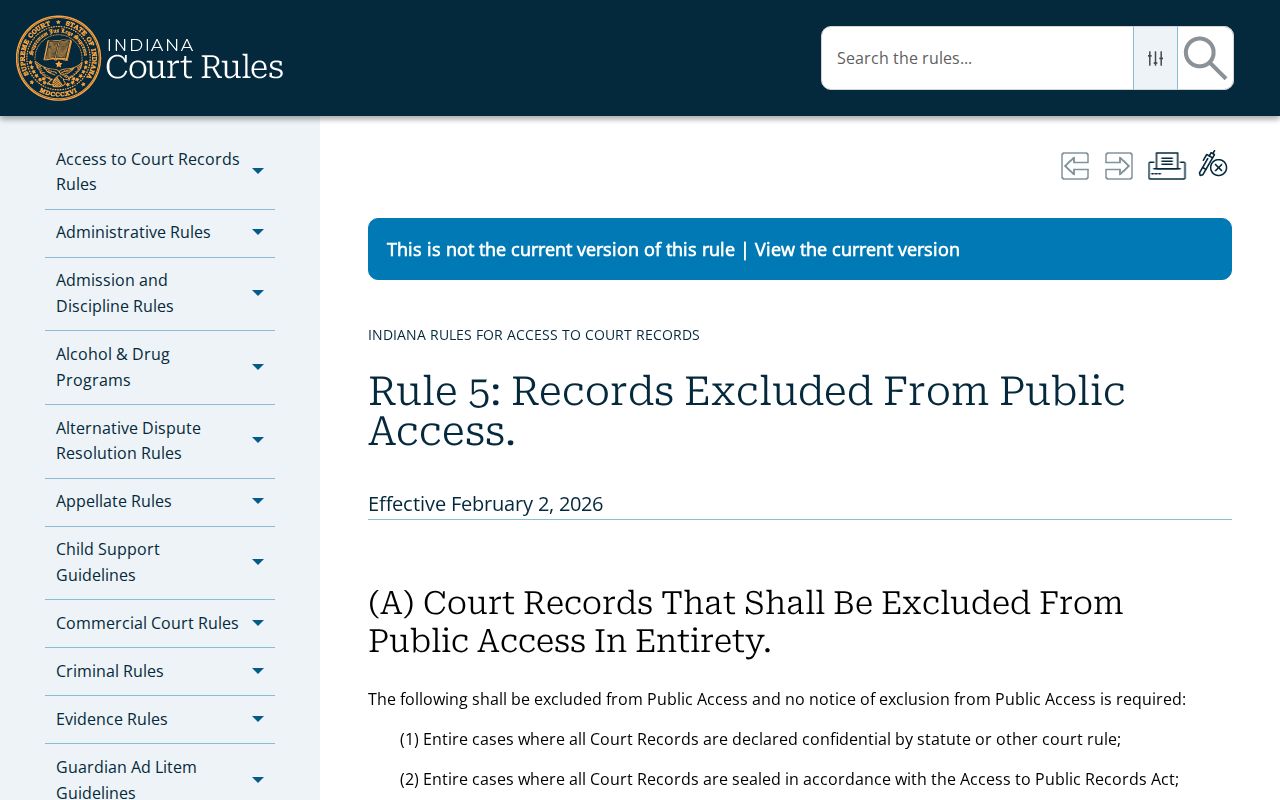
Several documents mark the trail in Marshall County: charging information, a probable-cause finding, the warrant itself, a return showing execution, and later custody or bond orders. Each serves its own function. A docket summary may list an event without displaying the document behind it, so ask the Clerk for the specific item rather than assuming everything is online. Indiana Access Rule 5 keeps some material out of public view, including investigative requests and search-warrant material in covered circumstances. Support for an arrest warrant can also be sealed by court order or by law. The rule offers a petition process where it applies. Access is never guaranteed, though, and a Marshall County warrant lookup will hit closed doors on some files.
Arrest Warrants: What They Contain
Indiana's statutory warrant structure offers a practical field checklist for what a warrant contains. Formatting in Marshall County can vary, and the county publishes no distinct local warrant-number format.
| Case identifier | A cause number such as one beginning 50C01 or 50D02; it is not necessarily a warrant number. |
|---|---|
| Named subject | The person whom the warrant commands officers to arrest. |
| Charge or offense | The alleged offense and related case information, subject to access limits. |
| Issuing court | The Circuit or Superior Court and judicial signature or authorization. |
| Bond | A stated amount or direction for judicial review, if the order addresses release. |
| Date and command | Issuance date and direction to bring the person before the proper court. |
Marshall Court Codes and Arrest Warrants
Marshall County runs its criminal cases through four courts of record, and every one has its own code. Circuit Court carries 50C01. Superior Court No. 1 uses 50D01, Superior Court No. 2 uses 50D02, and Superior Court No. 3 uses 50D03. A code tells you which court owns a Marshall County case. That is all it tells you. Whether an arrest warrant is still active is a separate question for the clerk. The old Plymouth city court and Argos town court identifiers are gone. Their city police can still investigate, seek a warrant, and make an arrest, but the case itself now routes through the county Circuit or Superior Courts. Check the code before you call or order copies.
How Warrants Get Served in Marshall County
The Marshall County Sheriff and other authorized agencies execute arrest warrants. An officer might find one during a traffic stop, a call at your door, or a routine records check. The agency holding the paper is not always the issuing court. City police involvement does not open a separate city-court case. What happens after arrest, meaning probable-cause review, the initial hearing, bond, and release conditions, depends on the order and the case. Probation, parole, state, or federal holds can also keep someone in custody. For jail and warrant information, the Sheriff publishes 574-936-3187 and Press 2. Stick to official numbers, and ignore unsolicited payment demands.
Marshall Arrest-Warrant Verification
MyCase can locate an eligible public case, but the Indiana judiciary states plainly that it is not a warrant search. No public website searches every arrest warrant across Indiana. A confidential warrant may not appear at all. Even an open case can omit documents or older material, so a Marshall County warrant check still runs through the court itself.
- Search by the known cause number when possible.
- Confirm the Marshall court code and read the CCS dates.
- Call the Clerk at 574-936-8922 for the current public court record.
- Call the Sheriff at 574-936-3187 for warrant or custody procedure.
- Ask counsel how to address an active order safely.
Note: No official searchable Marshall active-warrant roster was located as of September 10, 2026.
Arrest Warrants, Summonses, and Bench Warrants
Arrest warrants, summonses, and bench warrants can all sit in the same Marshall County dockets, yet each demands a different response. For failure-to-appear detail, see Bench Warrant Lookup.
| Feature | Arrest Warrant | Summons | Bench Warrant |
|---|---|---|---|
| What it directs | Custody | Appearance without initial arrest | Custody after a missed duty |
| Basis | Probable cause | Charge and ordered appearance | Existing case obligation |
| Issuer | Judge or authorized judicial officer | Court process under Indiana law | Judge in the pending case |
| Response | Legal advice, surrender, hearing, bond | Appear as directed | Seek appearance and recall |
Marshall Bond Is Case-Specific
Marshall County local rules set provisional bond amounts for outright arrests when no judicial officer has fixed a set figure. The schedule varies by offense level and covers special categories. A judge can still review and change it. For Level 1 through 4 outright arrests, the schedule does not apply at all until a judicial officer finds probable cause and sets bond. Holds and enhancements can matter more than the listed number. The rules account for multiple offenses, nonresidence, prior felonies, prior failures to appear, new alleged offenses while on release, and certain domestic-violence conditions. So ask three questions. Is bond set? Does another hold apply? What order controls payment? A kiosk receipt alone does not mean the warrant or charge is gone.
Handling an Arrest Warrant in Your Name
Start by confirming the court, the cause number, warrant status, bond, and any separate holds. Then talk with a criminal-defense lawyer about a planned surrender and first hearing. The Sheriff cannot recall a court order. The judge controls the warrant and release terms, while the Sheriff handles booking and custody logistics. Marshall County payment options come from the Sheriff's FAQ. It describes a lobby kiosk and the GTL Connect Network for eligible bond payments, taking cash or major cards, with possible fees. For inmate bond, select Trust rather than Prepay. Verify eligibility and the exact account first. Keep every receipt, and get the later court entry showing the next legal event.
Important: Speak with a lawyer and confirm official surrender instructions before appearing; an active arrest warrant can result in immediate custody.
Requesting Marshall Arrest-Warrant Records
Marshall County makes warrant copies straightforward if you ask the right way. The court copy-request form wants your contact details, the cause number, the document date, what you need, and how many copies. Pickup can be by mail, email, or in person. You can also arrange card payment by phone. Charges run $1 per page plus $3 for certification, though it pays to confirm the current cost first. Keep the request narrow. Something like: "Please provide the public warrant order, return, and related CCS entries in cause number [number] for [date range]" works well. Indiana APRA demands reasonable particularity and never forces an office to build a new record. Court access rules, not APRA alone, govern court files. Juvenile, sealed, expunged, or otherwise excluded material may be withheld from a Marshall County warrant records request.
Search Warrants Are Different
An arrest warrant and a search warrant do two different jobs. One puts a named person in custody. The other lets officers look for evidence in a home, a car, a phone, or some other place or thing. News from Marshall County sometimes covers multi-agency search-warrant operations, but those stories are not an arrest-warrant roster and say nothing about any one person's current status. Indiana's court-access rule keeps certain search-warrant material out of routine record requests, so some investigative filings simply cannot be pulled that way.
Check any arrest warrant with the Marshall County court that issued it or the Sheriff, never through a search-warrant news story.